
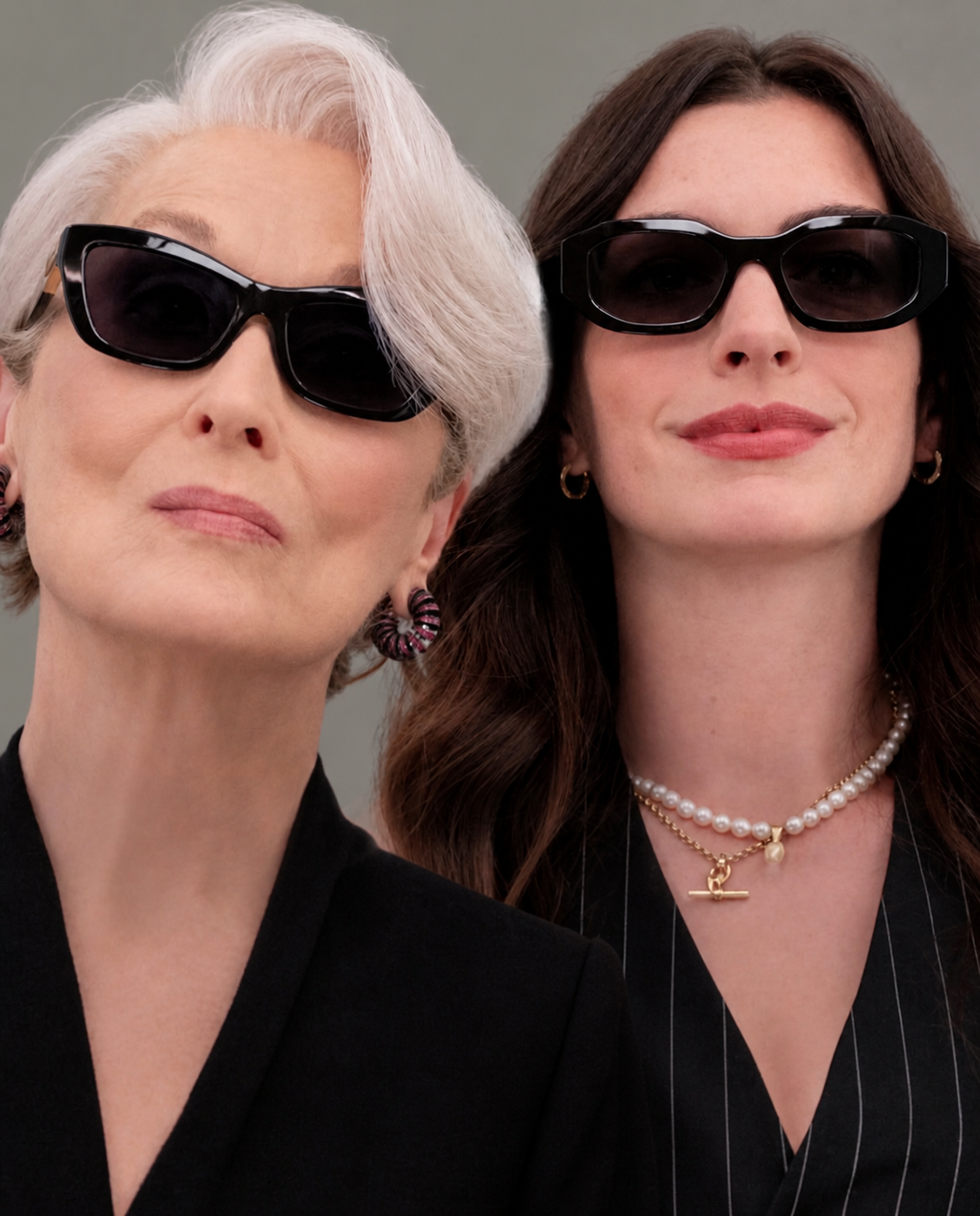
The sequel didn’t just come back wearing Prada. It came back asking who pays the price for being powerful.
Some films are watched for the plot.
Others are watched for one Meryl Streep glance, one coat that enters the room before the woman wearing it, and one line that makes you wonder why ambition is only considered unattractive when it belongs to a woman.
The Devil Wears Prada 2 returns almost twenty years later, in a world where magazines no longer rule alone, social media has become the new front row and power no longer always wears stilettos. Sometimes, it wears burnout, HR complaints and an algorithm demanding clickbait.
The result is not just nostalgia. It is a study of how the modern woman dresses, speaks, survives and redefines herself.
The new power dressing does not shout. It negotiates.
In the original film, fashion was initiation. Andy had to transform in order to belong. In the sequel, fashion feels less like a makeover and more like a survival language.
The wardrobe leans into vintage Armani, tailored menswear and archival couture — not as costume, but as character evolution.
The lesson is very 2026:
style no longer needs to prove that you are powerful. It needs to show that you know who you are.
Miranda Priestly is no longer just a boss. She is a case study.
Miranda in 2006 was fear in white hair and perfect tailoring. Miranda in 2026 is more interesting: a woman-symbol trying to survive in a world that loves content, but not necessarily quality.
The question is no longer, “Is Miranda good or bad?”
The question is: how many women had to become Miranda just so the room wouldn’t swallow them whole?
Andy Sachs grew up — and thankfully, she did not become Miranda.
Andy returns not as the girl who didn’t understand cerulean, but as a woman who has lived, worked, lost and rebuilt.
Her style is no longer about being accepted by fashion. It is about choosing what fashion means to her.
The lesson?
You do not have to become the woman who scared you in order to prove that you have grown.
Emily is the most modern heroine of the film.
Emily may be the real revelation. Once the hyper-ambitious assistant living for Paris, she is now a woman who has turned ambition into actual power.
She is no longer waiting for approval. She has become the budget.
And that may be the chicest career lesson of the entire film.
Vintage is not nostalgia. It is intelligence.
The film’s use of vintage and archival fashion is not just aesthetic. It is a statement.
In an era where everyone risks being dressed by the same algorithm, vintage becomes personality. It says: I know what came before me. I know what lasts. I know what deserves a second life.
True style is not about wearing the newest thing. It is about wearing something with history and making it look inevitable.
Red is the new “do not underestimate me.”
The press tour’s red power suits offered a modern lesson in visibility. Red here is not merely sexy. It is strategic.
It does not say “look at me.”
It says, “I know you already are.”
The film loves fashion, but it does not excuse it.
The sequel seems to understand something essential: fashion can be beautiful, transformative and intelligent — but it is not innocent.
In 2026, fashion has to answer harder questions.
Who makes the clothes?
Who profits?
Who becomes a trend?
Who becomes disposable?
The film’s glamour works because it comes with tension.
Real chic is not losing yourself.
If the first film taught us that fashion is deeper than we think, the second reminds us that success is more complicated than it looks.
Andy does not need to reject fashion to be serious.
Miranda does not need to become soft to be human.
Emily does not need to hide her ambition to be likable.
And us?
We do not have to choose between being smart, stylish, ambitious, sensitive, difficult, funny, tired and fabulous.
We can be all of it. Preferably in a very good coat.